
Luton units and workshops
Floor prep before epoxy: what has to happen first
The condition of your concrete slab decides whether a resin coating holds or peels. Find out what floor prep before epoxy involves, why grinding and shot blasting take up so much of the quote, and how specialist firms in Luton prepare a surface.
Why floor prep before epoxy matters so much
Why grinding takes up so much of the quote
A common question from unit owners in Luton is why concrete grinding before coating and shot blasting account for such a large share of the price. The reason is that preparing concrete for resin is not a quick sweep and a primer. The slab surface must be opened up mechanically so the epoxy has something to grip. A smooth, trowelled warehouse floor will reject a coating within months if it is left as it is.
The specialist firm uses heavy planetary grinders or blast machines to strip the top layer of cement paste and expose the aggregate beneath. This takes time, fuel, diamond tooling and skilled operators. On a typical industrial unit near Dunstable or Houghton Regis, preparation alone can fill a full working day before a single tin of resin is opened. The cost reflects that labour and machinery, because skipping it guarantees the coating will fail.
Grinding versus shot blasting on your slab
Deciding between diamond grinding a workshop floor and shot blasting a warehouse floor in Luton depends on the condition and hardness of the concrete. Grinding suits slabs that are relatively flat but have a hard, sealed surface. The rotating diamond heads cut through laitance and old sealers to leave a uniform profile.
Shot blasting fires steel media at the surface under high pressure. It is faster on large open areas and better at removing thick contamination like old paint or heavy grease. If the slab is soft or uneven, blasting can dig in too far and create hollows. A specialist will test a small area first to see how the concrete responds. Floors around Leagrave and Chalton vary widely in age and mix, so the method is chosen after inspection rather than assumed in advance. Both approaches produce dust, which leads to the next concern.
Dust control during preparation
Removing old floor paint in Luton or grinding bare concrete generates fine silica dust. Specialist firms use industrial vacuums attached directly to the grinding or blasting equipment. These machines capture the vast majority of particles at the source.
Even with extraction running, some dust escapes. If your workshop shares space with sensitive machinery, stock or finished goods, the contractor will usually seal doorways and vents with temporary polythene barriers. In larger units they may work in bays, completing one section while the rest of the building stays protected. You should tell the firm about anything nearby that cannot tolerate dust when you describe the job. They plan containment around what is in the room, not just the floor itself.
Cracks, joints and weak spots
Joint cutting a concrete floor is necessary when existing control joints are too narrow or filled with debris. Epoxy does not bridge movement joints. If a joint is ignored, the coating will crack along the same line within weeks. The specialist widens and cleans these joints, then fills them with a flexible resin or semi-rigid filler that moves with the slab.
Hairline cracks are routed out and patched with a fast-setting repair mortar before the main coating begins. Sometimes grinding reveals that the slab is weaker than expected. The surface may crumble or expose large voids. When this happens, the firm pauses and reassesses. A weak subfloor might need a levelling screed or a moisture barrier before any epoxy goes down. Continuing blindly over compromised concrete wastes material and leaves you with a floor that chips under light use.
Clearing the space and scheduling the work
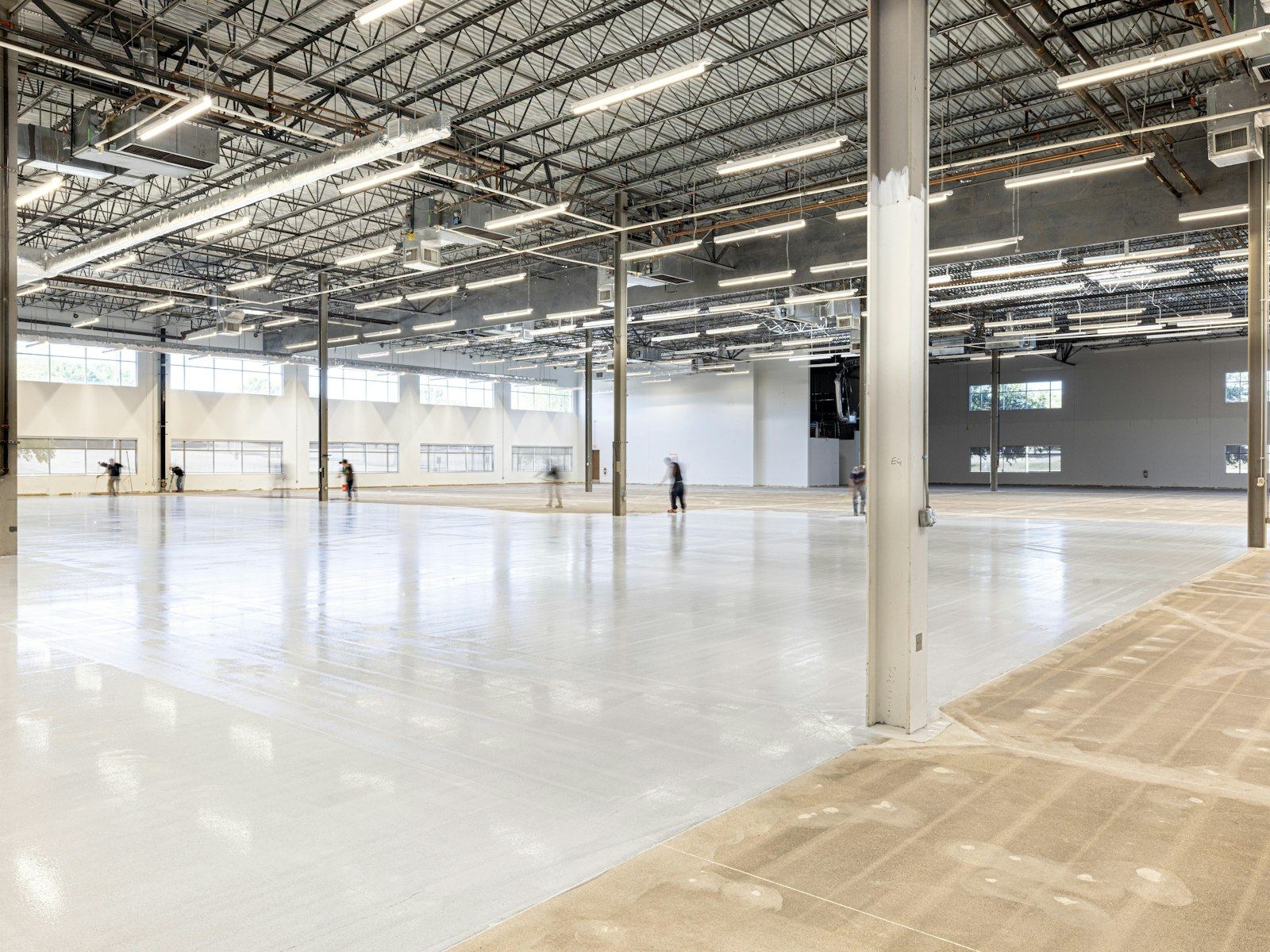
Most specialist firms prefer an empty floor. Racking, benches and stored materials get in the way of large grinding machines and create shadows where preparation is missed. If clearing the whole unit in one go is impossible, the work can be split into phases. One half of a warehouse in Pepperstock or Lower Sundon is prepared and coated while operations continue on the other side, then the process repeats.
Phased work costs more because the crew mobilises twice and has to feather the join between sections carefully. Preparation typically takes one to two days for a standard unit, depending on size and contamination. Only after the slab is clean, dry and profiled does the clock start on the actual epoxy application. Rushing this sequence is the most common reason coatings lift and bubble.
Signs your concrete is not ready for a coating
Epoxy fails when the slab beneath it is contaminated, damp or too smooth. These visible signs suggest the surface needs mechanical preparation before any resin goes down.
- 1
Shiny or sealed surface
Water beads up instead of soaking in. The pores are closed and a coating will sit on top rather than bond.

- 2
Flaking old paint
Loose paint or adhesive remains stuck to the concrete. Any new layer applied over it will peel away together.

- 3
Visible cracks along joints
Lines running parallel to walls or columns show movement. Coating straight over them transfers the crack upward.
- 4
White powdery residue
A chalky film on the surface means laitance or efflorescence is present. It acts as a barrier between concrete and resin.
- 5
Dark damp patches
Discoloured areas that stay wet suggest rising moisture. Epoxy applied here traps water and eventually blisters.
Questions about preparing concrete for resin
Answers to the things unit owners in Luton ask before booking floor preparation work.
- Cost of grinding and blasting
- Preparation dominates the quote because it requires heavy machinery, diamond consumables and skilled labour for a full day or more on site.
- Choosing grinding or blasting
- A specialist tests a small area. Hard, smooth slabs suit grinding; thick contamination or large open warehouses often need shot blasting.
- Dust reaching your workshop
- Firms attach industrial vacuums to their machines and seal doorways. Sensitive stock should still be moved or covered beforehand.
- Cutting joints before epoxy
- Movement joints must be widened, cleaned and filled with a flexible compound. Epoxy cannot span a joint that shifts.
- Time before coating starts
- Preparation usually takes one to two days. The slab must then be vacuumed and checked for moisture before resin is mixed.
- Working over old paint or adhesive
- Old coatings must be fully removed. Grinding or blasting strips them back to bare concrete so the new epoxy bonds properly.
Ask a specialist about your concrete slab
Describe your floor and what is wrong with it. A specialist firm will assess whether it needs grinding, blasting or repairs, and provide a cost without obliging you to proceed.
- No obligation
- Slab assessment
- Local specialists