
Luton industrial floors
Epoxy over damp concrete: tests and moisture barriers
Describe the state of your slab and a specialist firm will tell you whether it can take a coating. There is no charge for this advice, and nothing to commit to until you decide.
Why moisture ruins a resin floor
Applying epoxy over damp concrete is the single most common reason a coating fails. Water vapour pushes up through the slab and breaks the bond between the resin and the surface. The result is bubbling, lifting or peeling, sometimes within weeks of the work finishing.
In Luton, many older industrial units and workshops were built without a damp proof membrane under the slab. Ground moisture travels upward freely. Even where a membrane exists, it may have degraded or been punctured during later construction work. A concrete moisture test before coating is the only way to know what is happening below the surface.
Specialist firms do not guess at this. They measure it. If readings fall outside safe limits, they will say so plainly rather than risk a failure that costs everyone time and money.
How specialists measure moisture in a slab
A specialist uses two main methods to find out how much water is moving through the concrete. The first is a hygrometer test on the concrete slab. A sealed box sits on the surface for at least 72 hours, trapping the air directly above the concrete. The instrument inside records the relative humidity of that trapped air.
The second method involves drilling small holes into the slab and inserting probes to read conditions deeper down. This matters because the surface might feel dry while moisture sits just below.
Both tests run together give a clear picture. The specialist records readings from several points across the floor, since rising damp on a warehouse floor rarely behaves uniformly. One corner near a loading bay might read high while the centre stays dry. Testing multiple spots prevents a false sense of security from a single low reading.
What the numbers mean for your floor
Moisture readings sound technical, but they translate into a simple decision. For a standard epoxy system, the relative humidity trapped above the slab generally needs to stay below 75 percent. Some products tolerate slightly more, but 75 percent is the usual threshold.
If the reading is below that line, the specialist can proceed with normal preparation and coating. If it sits between 75 and 85 percent, they may recommend a moisture-tolerant primer or a specific resin formulation designed for damper conditions.
Above 85 percent, standard epoxy will fail. At that point, the specialist will put forward a different approach entirely. They might suggest installing a liquid damp proof membrane under the resin, or applying a cementitious barrier coat first. These layers block the vapour before the decorative or protective top coats go down. The exact remedy depends on how far above the limit the readings sit and what the floor needs to withstand once finished.
Coating a slab with no membrane
Many units in Luton lack any physical barrier beneath the concrete. That does not mean the floor cannot be coated, but it changes the specification. A specialist will factor this absence into every decision, from the primer to the topcoat.
Where new concrete how long before coating becomes the question, the answer is typically 28 days minimum for the slab to cure, followed by moisture testing. Fresh concrete holds enormous amounts of water. Coating it early traps that moisture, and the pressure eventually lifts the finish.
For older slabs with no membrane, the specialist may apply a reactive resin primer that cures even in the presence of moisture, creating a stable base. Alternatively, they might lay down a full surface-applied damp proof barrier before the wear layers. Both approaches add steps to the job, but they prevent the costly problem of epoxy failed because of moisture pushing through from below.
Costs and timelines for dealing with damp
Adding a moisture barrier changes the price and the schedule. A liquid damp proof membrane applied across the whole floor adds material cost and requires its own curing period before the next layer goes down. The specialist pricing the job will itemise this separately so the difference is visible.
Testing itself takes time. Allow three to four days for the hygrometer boxes to gather reliable data before anyone starts grinding or priming. Rushing this stage risks coating over a problem that has not been properly measured.
Once the readings are back and a remedy is agreed, the specialist sets a start date. In Luton, firms carrying out this work plan around production schedules where possible, often working weekends or evenings in occupied units so the downtime stays short.
Signs your concrete is too damp for epoxy
Moisture moving through a slab shows itself in specific ways. These signs do not confirm a diagnosis, but they indicate that testing should happen before any coating goes down.
- 1
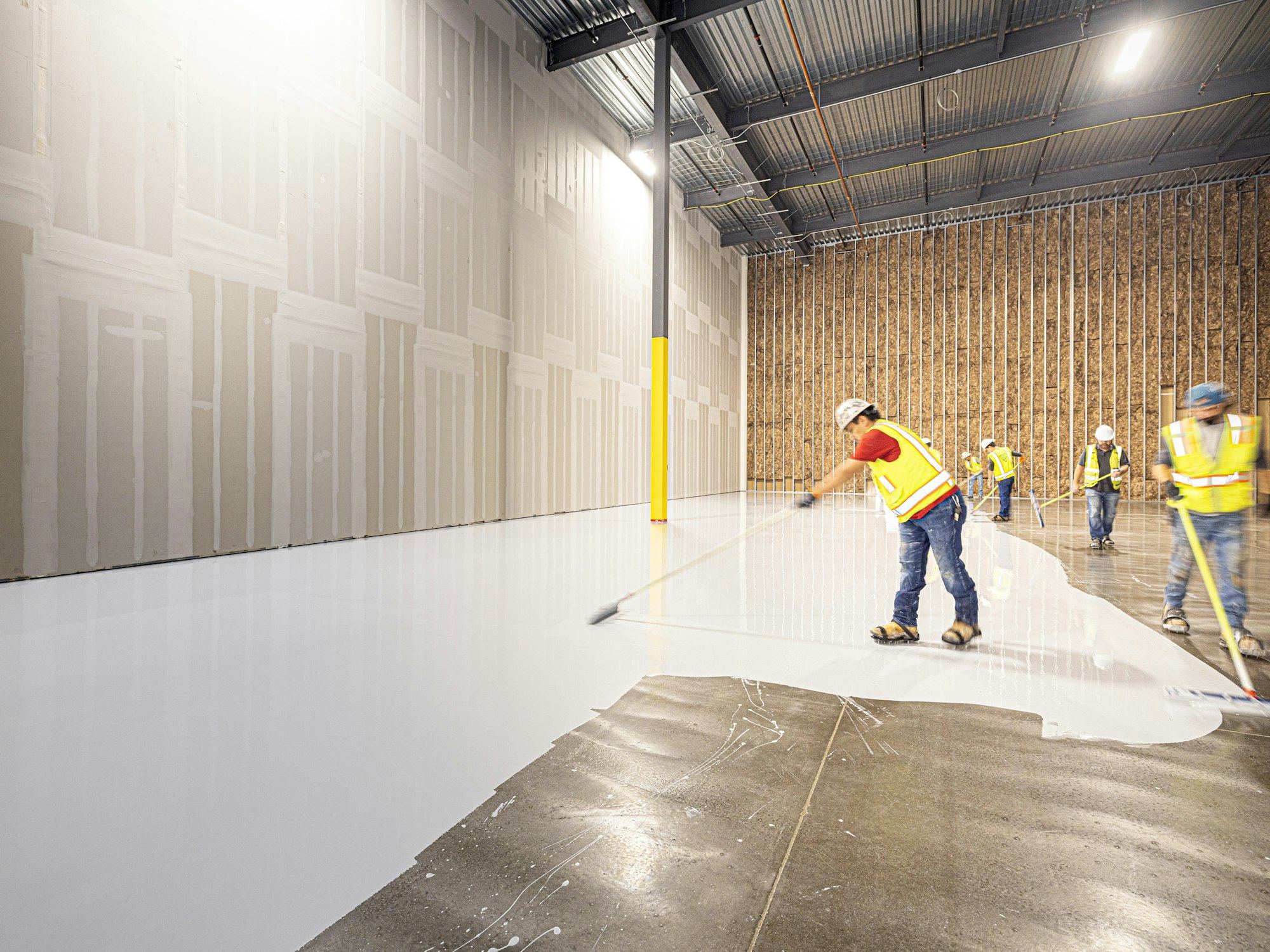
Dark patches on the surface
Areas that stay darker than the surrounding concrete, especially after cleaning, often hold more moisture below the surface.
- 2
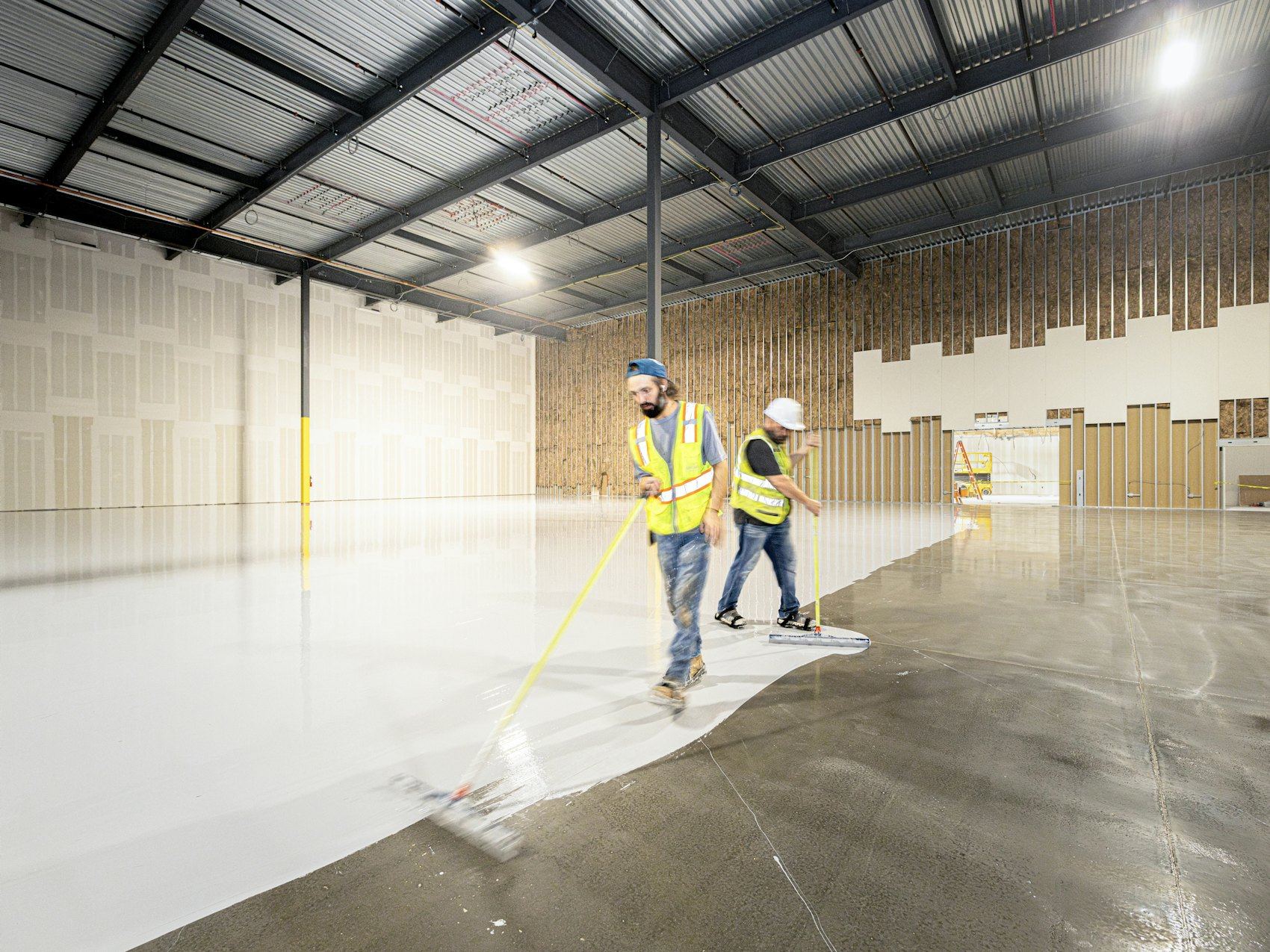
White powdery deposits
A chalky residue left behind when water evaporates carries dissolved salts to the surface, suggesting ongoing moisture movement.
- 3
Bubbling in existing paint
Where old paint blisters and lifts, trapped vapour is likely pushing it away from the concrete beneath.
- 4
A persistent musty smell
Damp concrete in a closed unit produces a distinct odour that ventilation alone does not clear, pointing to ground moisture.
Questions about damp slabs and epoxy
These cover what callers in Luton ask most often. For anything else, send an enquiry directly. Ask a different question.
- How do you test whether my Luton slab is too damp for epoxy?
- A specialist seals hygrometer boxes to the surface for 72 hours and drills probe holes to read deeper moisture levels. They test multiple points across the floor, since damp rarely spreads evenly.
- What do the moisture readings actually mean in plain terms?
- Below 75 percent relative humidity, standard epoxy usually bonds safely. Between 75 and 85 percent, a specialist recommends a moisture-tolerant primer. Above 85 percent, a full barrier coat is needed before any resin goes down.
- My unit has no damp proof membrane, can anything still be coated?
- Yes. A specialist applies a surface damp proof membrane or a moisture-tolerant primer first. These block vapour from reaching the top coats, making coating possible even on older Luton slabs.
- How much does a damp proof barrier add to the cost of the floor?
- A liquid barrier coat typically adds a separate line item for materials and extra labour. The specialist quotes this upfront so you see the difference before agreeing to proceed.
- How long do the moisture tests take before you can start coating?
- Hygrometer boxes need 72 hours sealed to the slab to collect accurate readings. Allow three to four days total before the specialist has enough data to specify the right system.
- If the floor was recently poured, how long should I wait before coating?
- New concrete needs at least 28 days to cure before testing begins. After that, moisture readings determine whether it is ready. Fresh slabs hold significant water, so rushing causes failures.
- What happens if we coat anyway and it lifts later, who covers that?
- If a specialist tested the slab, recorded safe readings and followed their own specification, their terms cover defects. If testing was skipped against their advice, liability falls outside their guarantee.
- Can damp be coming up in only part of the floor?
- Yes. Rising damp on a warehouse floor often concentrates near external walls, drains or damaged areas. That is why specialists test several points rather than relying on a single reading.
Find out if your slab is ready for epoxy
Send details about your floor and a specialist firm will advise whether it needs testing or can be coated directly. There is no fee for this, and no obligation to book any work.
- No charge for advice
- No booking required
- Local to Luton